What Are Equity Funds?

equity funds is one of the most popular types of investment funds. In this section, we will explore what equity funds are, how they work, and how they can benefit your investment portfolio.

Firstly, equity funds are investment funds that focus on investing in stocks of publicly traded companies. These funds are managed by professionals who select stocks based on their research and analysis, with the aim of maximizing returns for investors.

Equity funds are investment funds that focus on investing in stocks and other equity securities. There are several types of equity funds available to investors, each with its own investment objectives and risk profile. Two common types of equity funds are mutual funds and exchange-traded funds (ETFs).

Mutual funds are professionally managed investment funds that pool money from multiple investors to purchase a diversified portfolio of stocks and other securities. Mutual funds are managed by investment professionals who use their expertise to select a mix of securities that meet the fund’s investment objectives. Mutual funds are attractive to investors who want exposure to a diversified portfolio of equity securities without having to pick individual stocks themselves.

Mutual funds can be further categorized into actively managed funds and passively managed funds. Actively managed funds are managed by professional portfolio managers who actively buy and sell securities in an attempt to outperform the market. Passively managed funds, on the other hand, seek to track the performance of a specific market index. As a result, the fees associated with passively managed funds are typically lower than those associated with actively managed funds.

ETFs are similar to mutual funds in that they offer exposure to a diversified portfolio of stocks and other securities. However, unlike mutual funds, ETFs trade like a stock on an exchange and can be bought and sold throughout the day. ETFs can be further categorized into passive ETFs and actively managed ETFs.

Passive ETFs seek to track the performance of a specific market index, while actively managed ETFs are managed by professionals who attempt to outperform the market. ETFs are attractive to investors who want the flexibility to trade throughout the day and who are comfortable making their own investment decisions.

Both mutual funds and ETFs offer the benefit of a diversified portfolio of stocks and other securities. A diversified portfolio can help reduce the risk associated with investing in individual stocks or securities. By investing in a diversified portfolio of equity securities, investors can gain exposure to a broad range of companies and industries, which can help mitigate the risk of any one company or industry underperforming.

Investors should carefully consider their investment objectives and risk tolerance before investing in equity funds. While equity funds can be an attractive investment option for long-term growth, they do come with risks and require careful consideration of individual investment goals and strategies.

Equity funds offer several benefits for investors looking to grow their wealth over the long-term. Here are some of the key advantages:

  • Diversification: Equity funds provide diversification by investing in a wide range of companies across different sectors. This can help reduce overall investment risk.
  • Professional Asset Management: Equity funds are managed by professional fund managers who have extensive knowledge and experience in investing in the stock market. They use their expertise to make informed investment decisions on behalf of investors.
  • Liquidity: Equity funds are highly liquid, which means that investors can buy and sell them easily on the stock market. This provides investors with the flexibility to make changes to their investment portfolio quickly and efficiently.
  • Potential for High Returns: Equity funds have the potential to offer high returns over the long-term, as they invest in companies that have the potential to grow and increase in value.
  • Contributes to Financial Planning: Equity funds can be a useful tool for long-term financial planning, such as saving for retirement. By investing in equity funds regularly, investors can build a diversified investment portfolio that can help them achieve their financial goals.

Overall, equity funds can be a valuable addition to any investment portfolio, providing investors with diversification, professional management, liquidity, and potentially high returns. Consider speaking with a financial advisor to determine if equity funds are suitable for your investment goals and risk tolerance.


Investing in equity funds can be an effective way to build wealth and achieve long-term financial goals. However, with so many options available, it can be challenging to determine the best approach for your investment portfolio. Here are some strategies to consider when investing in equity funds:

Diversification is a common investment strategy that involves spreading your money across different types of assets to minimize risk. When investing in equity funds, you can diversify your portfolio by investing across different sectors and geographical regions. This approach can help you minimize the impact of any market fluctuations that may occur in a specific sector or region.

Expense ratios are the fees charged by investment companies to manage their funds. These fees can eat into your returns and reduce your overall investment performance. When investing in equity funds, it’s important to pay attention to the expense ratios of the funds you’re considering. Look for funds with lower expense ratios to ensure you’re not giving away too much of your investment to fees.

Active and passive management are two different investment strategies used by equity fund managers. Active management involves a team of professionals who actively buy and sell stocks in an attempt to outperform the market. Passive management, on the other hand, involves investing in a specific index or benchmark and holding those stocks for the long-term. When choosing an equity fund, you can decide whether you want to use an active or passive management strategy based on your investment goals and risk tolerance.

Over time, the composition of your equity fund portfolio may change as some investments gain value while others lose value. Rebalancing your portfolio involves making adjustments to ensure your investments are still aligned with your financial goals and risk tolerance. Rebalancing may involve selling some investments and buying others, and it should be done periodically to ensure your portfolio remains in line with your investment objectives.

Dollar-cost averaging is a strategy that involves investing a fixed amount of money in an equity fund at regular intervals over time. This approach can help you avoid investing all your money at once and potentially buying at a market peak. By investing regularly, you can take advantage of market fluctuations and potentially buy more shares when prices are low.

By considering these investment strategies when investing in equity funds, you can maximize your returns, minimize your risk, and achieve your long-term financial goals.

Equity funds can play an essential role in investment portfolios, providing exposure to the stock market and its potential for long-term gains. By diversifying investments across various equity holdings, mutual funds can reduce risk and create opportunities for growth.

It’s important to remember that equity funds are long-term investments, and short-term volatility can be expected. However, by managing assets effectively and implementing investment strategies, investors can mitigate risk and achieve their financial goals.

When considering equity funds as part of your financial planning, it is recommended to consult with a financial advisor and conduct thorough research to ensure suitability and compatibility with your investment objectives.


The Classification of Fixed Income Securities Explained

Fixed income securities are a crucial part of any investment portfolio, and understanding their classification is essential for making informed investment decisions. As a highly skilled assistant who specializes in digital marketing and content writing, I am here to dive deep into the classification of fixed income securities and explain it in simple terms. In this article, we will explore the various types of fixed income, including bonds, Treasury bills, and notes, and examine how they differ in terms of risk, maturity, and yield. We will also discuss the benefits of investing in fixed income and how they can provide a stable income stream for investors. So, if you’re looking to expand your investment portfolio or simply want to learn more about fixed income, join me as we explore the world of fixed income investments.

Before diving into the classification of fixed income securities, it’s important to understand the basics of bonds. Bonds are a type of fixed income security that represents a loan made by an investor to a borrower.

The borrower can be a government, corporation, or municipality, and the bond represents their promise to pay back the principal amount plus interest to the investor on a specified date.

Bonds are typically issued with a maturity date, which is the date on which the borrower will repay the principal amount to the investor. Bonds can have varying maturity dates, ranging from a few months to several years, and the longer the maturity date, the higher the yield tends to be.

Bonds are also rated by credit agencies based on the creditworthiness of the borrower. The higher the credit rating, the lower the risk associated with the bond, and the lower the yield tends to be.

Fixed income can be broadly categorized into three types – bonds, mortgages, and money market securities. Bonds represent loans made by investors to borrowers, while mortgages represent loans made by banks to homebuyers. 

Money market securities are short-term debt securities that are typically issued by governments, corporations, or municipalities.

Bonds are the most common type of fixed income security and are issued by both governments and corporations. Mortgages are typically issued by banks and are secured by the borrower’s property. 

Money market securities are short-term debt securities that are typically issued by governments, corporations, or municipalities.

Fixed income can be further classified into four categories – government, municipal, corporate, and asset-backed securities. Each classification has its own set of characteristics and risks.

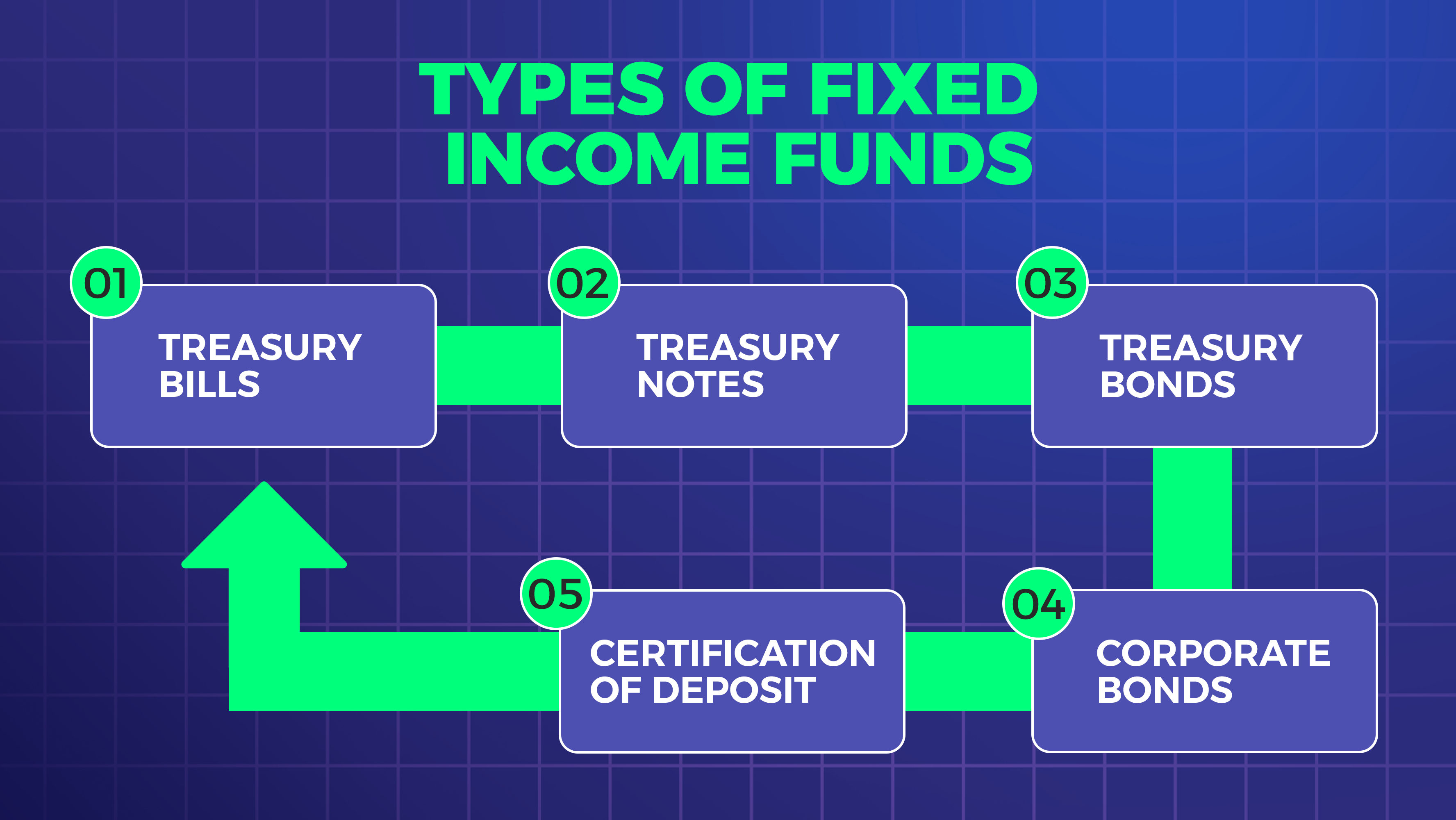
Government securities are issued by the federal government and are considered to be the safest type of fixed income security. These securities can be further classified into Treasury bills, notes, and bonds, depending on their maturity date.

Treasury bills have a maturity of less than one year, while Treasury notes have a maturity of one to ten years, and Treasury bonds have a maturity of more than ten years. The yield on government securities is typically lower than other types of fixed income, but they are considered to be the least risky.

Municipal securities are issued by state and local governments to finance public projects such as schools, roads, and hospitals. These securities are exempt from federal taxes and may be exempt from state and local taxes as well.

Municipal securities can be further classified into general obligation bonds and revenue bonds. General obligation bonds are backed by the full faith and credit of the issuing government, while revenue bonds are backed by the revenue generated by the project they are financing.

Corporate securities are issued by corporations to finance their operations and expansion. These securities can be further classified into investment-grade bonds and high-yield bonds.

Investment-grade bonds are issued by corporations with a high credit rating and are considered to be less risky than high-yield bonds. High-yield bonds are issued by corporations with a low credit rating and are considered to be more risky, but also offer a higher yield.

Asset-backed securities are securities that are backed by a pool of assets such as mortgages, auto loans, or credit card debt. These securities can be further classified into residential mortgage-backed securities, commercial mortgage-backed securities, and collateralized debt obligations.

The risk associated with asset-backed securities can vary depending on the quality of the underlying assets. Residential mortgage-backed securities are typically considered to be less risky than commercial mortgage-backed securities and collateralized debt obligations.

Each type of fixed income security has its own set of characteristics that can impact their risk and yield. Government securities are considered to be the least risky but also offer the lowest yield.

Municipal securities are exempt from federal taxes and may be exempt from state and local taxes as well. Corporate securities offer a higher yield but are considered to be more risky.

Asset-backed securities can be more complex and have varying degrees of risk depending on the quality of the underlying assets. The creditworthiness of the borrower and the credit rating assigned by credit agencies can also impact the risk and yield of a fixed income security.

While fixed income securities are generally considered to be less risky than stocks, there are still risks associated with investing in them. The most significant risk is the risk of default, which is the risk that the borrower will not be able to repay the principal amount plus interest.

Interest rate risk is also a significant risk associated with fixed income securities. When interest rates rise, the value of fixed income tends to fall, and vice versa. This can impact the yield of the security and the value of the investment.

Inflation risk is another risk associated with fixed income. When inflation rises, the purchasing power of the interest payments and principal amount decreases, which can impact the value of the investment.

Several factors can impact the risk and yield of fixed income. The creditworthiness of the borrower, the credit rating assigned by credit agencies, and the maturity date can all impact the risk and yield of a fixed income security.

Interest rates and inflation can also impact the risk and yield of fixed income. When interest rates rise, the value of fixed income tends to fall, and vice versa. Inflation can impact the value of the investment by decreasing the purchasing power of the interest payments and principal amount.

When comparing fixed income, it’s important to consider the risk and yield of each security. Government securities offer the lowest risk but also the lowest yield. Municipal and corporate securities offer a higher yield but are considered to be more risky.

Asset-backed securities can be more complex and have varying degrees of risk depending on the quality of the underlying assets. When comparing asset-backed securities, it’s important to consider the quality of the underlying assets and the structure of the security.

Fixed income securities can provide a stable income stream for investors and are often used to diversify investment portfolios. When investing in fixed income securities, it’s important to consider the risk and yield of each security and to diversify across different types of fixed income.

Bond funds and exchange-traded funds (ETFs) can also be used to invest in fixed income securities. These funds provide diversification across multiple fixed income and can be a good option for investors who want exposure to fixed income but don’t want to manage individual securities.

Fixed income securities are an essential part of any investment portfolio and can provide a stable income stream for investors. Understanding the classification of fixed income and the risks and benefits associated with each type can help investors make informed investment decisions. By diversifying across different types of fixed income, investors can reduce their overall risk while still generating a steady income stream.

Understanding Bond Ratings

Investing in bonds can be a valuable addition to any portfolio, but it’s important to understand the risks involved. One crucial factor to consider when making informed investment decisions is bond ratings.

Bond ratings are assigned by credit rating agencies to reflect the creditworthiness of bond issuers and help investors assess the risk of investing in a particular bond. Understanding bond ratings can help investors make informed decisions and manage their portfolio risk.

Key Takeaways:

  • Bond ratings reflect the creditworthiness of bond issuers and help investors assess the risk of investing in a particular bond.
  • Understanding bond ratings is crucial for making informed investment decisions and managing portfolio risk.

Bond ratings are a measure of the creditworthiness of bond issuers and their ability to repay investors. Bond ratings are assigned by credit rating agencies, which are independent organizations that evaluate and rate financial instruments based on their risks and rewards.

The rating agencies typically use a letter-based rating scale to rate bonds. The highest rating is usually “AAA” or “Aaa,” indicating that the issuer has an extremely high credit rating and is very unlikely to default on its debt. The lowest rating is usually “D,” indicating that the issuer has already defaulted on its debt obligations.

Bond ratings play a critical role in the bond market. Investors use these ratings to make informed decisions about which bonds to buy, how much to invest, and what price to pay. Bond ratings also determine the interest rates that issuers must pay to borrow money.

Bond ratings are assigned by credit rating agencies such as Standard & Poor’s, Moody’s, and Fitch Ratings. These agencies use a variety of quantitative and qualitative factors to determine the creditworthiness of bond issuers.

Each rating agency has its own rating scale and methodology, but the general principles remain the same. The rating agencies consider factors such as the issuer’s financial strength, cash flow, debt levels, operating history, industry outlook, and economic conditions.

Credit rating agencies employ experienced analysts who study the financial data of bond issuers and forecast their ability to repay their debt. Their analysis is based on a range of factors, including economic and financial trends, financial performance indicators, and management quality.

Bond ratings are determined by various factors, reflecting the creditworthiness of the issuer. The rating agencies assess the issuer’s ability to pay back the bond on time with interest, and the risk of default. The following are some of the factors that affect bond ratings:

FactorsDescription
Financial HealthThe financial statements of the issuer, including cash flows, income statements, debt levels, and net worth are scrutinized to determine the ability to repay the bond.
Credit HistoryPrevious borrowing history, repayment patterns, and credit ratings of the issuer are evaluated for any red flags in creditworthiness.
Economic ConditionsThe current and future economic environment, such as inflation, interest rates, and employment conditions, are taken into account to assess the impact on the issuer’s financial health and ability to repay the bond.
Industry OutlookThe industry to which the issuer belongs is evaluated for its financial prospects, risks, and competition, as it can reflect on the issuer’s ability to generate cash flows and repay bonds.
Bond TermsThe specific terms of the bond, such as the maturity date, interest rate, collateral, and covenants, are analyzed for their impact on the issuer’s capacity to pay back the bond.

These factors are used to assign a rating to the bond, which reflects the likelihood of the issuer defaulting on the bond. The higher the bond rating, the lower the default risk, and vice versa. It is essential to consider these factors when making informed investment decisions regarding bonds.

When it comes to bond ratings, there are two main categories of bonds: investment-grade and non-investment grade (also known as junk bonds). Investment-grade bonds are typically considered to be safer investments and have a higher likelihood of paying back the principal and interest to investors. Non-investment grade bonds, on the other hand, have a higher risk of default and are more speculative investments.

Investment-grade bonds are issued by companies or entities that are deemed to have a relatively low risk of defaulting on their debt obligations. These bonds typically have a rating of AAA, AA, A, or BBB from rating agencies such as Standard & Poor’s (S&P) or Moody’s Investors Service.

AAA-rated bonds are considered the safest investment and are issued by companies or entities with a strong financial track record, solid credit history, and excellent prospects for the future. AA-rated bonds are also considered safe investments but may have slightly more risk than AAA-rated bonds. A-rated bonds are relatively safe investments but may have a slightly higher risk than AA- or AAA-rated bonds. BBB-rated bonds are the lowest investment-grade rating and may have a moderate credit risk.

Non-investment grade bonds, or junk bonds, are issued by companies or entities that have a higher risk of defaulting on their debt obligations. These bonds typically have a rating of BB, B, CCC, CC, or C from rating agencies such as S&P or Moody’s Investors Service.

BB-rated bonds are considered speculative investments and have a moderate credit risk, while B-rated bonds have a higher credit risk than BB-rated bonds. CCC-rated bonds have a substantial credit risk and may be in default or near default, while CC-rated bonds are highly speculative and may already be in default. C-rated bonds are the lowest rating and are typically in default or very close to defaulting on their debt obligations.

While non-investment grade bonds have a higher risk of default than investment-grade bonds, they may offer higher yields and potential returns to investors willing to take on the added risk.

Bond ratings play a crucial role in making informed investment decisions. When evaluating bond ratings, it is essential to consider several factors.

Before investing in a bond, it is crucial to conduct a thorough analysis of the bond and its issuer. This involves reviewing financial statements, credit history, industry outlook, and economic conditions. The goal is to assess the issuer’s creditworthiness and determine the likelihood of default.

Additionally, it is important to evaluate the specific terms of the bond, such as the maturity date, coupon rate, and call provisions. These factors can impact the bond’s value and potential returns.

Different bond ratings reflect varying levels of credit risk. While higher-rated bonds generally offer lower yields, they also have a lower risk of default. On the other hand, lower-rated bonds, such as junk bonds, offer higher yields but also carry a higher risk of default.

It is important to assess the implications of different bond ratings on risk and potential returns. Conservative investors may opt for investment-grade bonds, while more aggressive investors may be willing to take on the higher risk associated with junk bonds in exchange for potentially higher returns.

Bond ratings can also play a role in diversifying an investment portfolio. By investing in bonds with varying ratings, investors can potentially reduce overall risk while still achieving their desired level of returns.

However, it is important to note that diversification does not guarantee a profit or protect against losses.

Ultimately, the decision to invest in a particular bond should align with an individual’s investment goals and risk tolerance. While bond ratings can provide valuable insights, they should not be the sole determining factor in investment decisions.

By conducting thorough research, evaluating the implications of different bond ratings, and aligning investment goals with risk tolerance, investors can make informed decisions and potentially achieve their desired outcomes.

Understanding bond ratings is essential for making informed investment choices. Bond ratings reflect the creditworthiness of bond issuers and are assigned by reputable agencies. Factors affecting bond ratings include financial health, credit history, economic conditions, industry outlook, and specific bond terms.

There are different bond ratings such as investment-grade bonds and non-investment grade bonds that carry different levels of risk and potential returns. It is crucial to evaluate bond ratings when making investment decisions to align investment goals with risk tolerance.

Conducting thorough bond analysis and diversifying a portfolio can help reduce risk and increase the potential for returns. By considering bond ratings and their implications on investment decisions, investors can make informed and strategic choices to achieve financial goals.

What Is Asset Management?

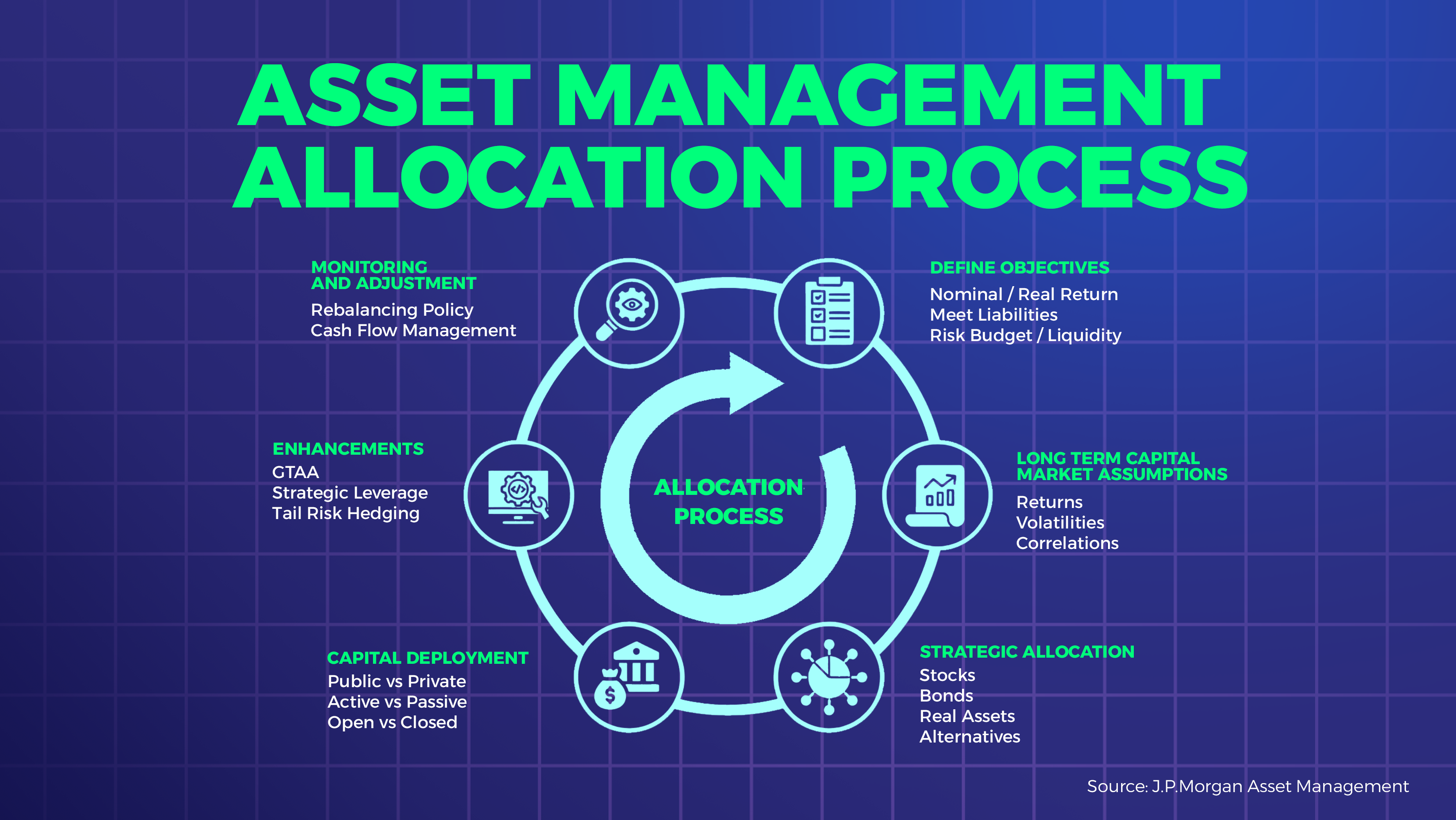
Asset management is the process of managing a company’s or individual’s investments to achieve specific financial goals while minimizing risk. 

This includes a range of financial assets, such as stocks, bonds, real estate, and commodities.

Asset management typically involves working with a professional asset manager, who uses a variety of techniques to analyze financial data, 

identify opportunities for investment, and make informed decisions about how to allocate resources.

These decisions may involve selecting individual securities or investment products, setting investment strategies, and monitoring the performance of the portfolio over time.

Effective asset management requires a deep understanding of financial markets, investment products, and risk management techniques,

 as well as strong analytical and communication skills. It is an important tool for individuals and businesses looking to grow their wealth, manage their assets, and achieve their financial goals over the long term.

Asset Management Process

There are several types of asset managers, each specializing in managing different types of assets and catering to different types of clients.

 Here are some of the most common types:

Investment Managers: These asset managers manage investment portfolios on behalf of their clients.

They are responsible for selecting individual securities and making investment decisions based on market analysis and their clients’ investment goals.

Wealth Managers: Wealth managers provide comprehensive financial planning and investment management services to high-net-worth individuals and families.

They help their clients manage their wealth by creating personalized investment strategies, tax planning, estate planning, and more.

Hedge Fund Managers: Hedge fund managers manage funds that invest in a variety of financial instruments, including stocks, bonds, commodities, and derivatives. 

They aim to generate high returns for their clients by using sophisticated investment strategies and taking on higher levels of risk.

Private Equity Managers: Private equity managers manage funds that invest in privately held companies.

 They aim to generate high returns for their investors by buying and selling companies, restructuring businesses, and improving operational efficiency.

Real Estate Asset Managers: Real estate asset managers manage portfolios of real estate investments on behalf of their clients.

They are responsible for selecting properties, managing the properties, and maximizing their clients’ returns.

Exchange-Traded Fund (ETF) Managers: ETF managers create and manage ETFs, which are investment funds traded on stock exchanges.

They are responsible for selecting the underlying assets, managing the portfolio, and tracking the performance of the ETF.

Mutual Fund Managers: Mutual fund managers manage mutual funds, which are investment vehicles that pool money from multiple investors to invest 

in a diversified portfolio of assets. They are responsible for selecting the individual securities in the portfolio, managing the portfolio, and tracking the performance of the fund.

These are just a few examples of the types of asset managers that exist. Each type of asset manager has its unique set of skills, expertise, and investment strategies that cater to different types of clients and investment goals.

The cost of asset management can vary depending on a variety of factors, such as the type and size of assets being managed, the investment strategy employed, the level of service provided by the asset manager, and the fee structure used.

Typically, asset management fees are charged as a percentage of assets under management (AUM). 

The average fee for asset management services is around 1% of AUM per year, but this can vary widely depending on the factors mentioned above.

For example, some asset managers may charge a higher fee for actively managed portfolios that require more research and analysis,

while others may charge a lower fee for passive or index-based strategies. Additionally, some asset managers may offer different levels of service

such as personalized financial planning or tax advice, which can also affect the cost.

It’s important to carefully review the fee structure and any other associated costs before choosing an asset manager. It’s also a good idea to consider.

The potential benefits of professional asset management, such as access to expertise and diversified investment portfolios, when evaluating the costs.


Asset management companies are financial institutions that manage and invest the assets of individuals and institutions. 

These companies offer a range of investment services, including managing portfolios of stocks, bonds, and other securities on behalf of clients.

Here’s a general overview of how asset management companies work:

Client Onboarding: Asset management companies begin by identifying potential clients and evaluating their investment objectives, risk tolerance, and financial situation. They then develop investment strategies that align with the client’s goals.

Portfolio Management: Once a client’s investment objectives and risk tolerance have been established, 

Asset management companies create and manage a portfolio of assets that aligns with the client’s investment strategy. 

They make investment decisions on behalf of clients, monitor the performance of the portfolio, and adjust the portfolio as needed to achieve the client’s investment goals.

Investment Research: Asset management companies conduct extensive research to identify investment opportunities that align with their clients’ objectives. They analyze financial statements, economic trends, and industry reports to make informed investment decisions.
Risk Management: Asset management companies employ risk management strategies to reduce the potential for losses in their clients’ portfolios.

This may include diversifying the portfolio across different asset classes and investment styles, monitoring market trends and making adjustments as needed,  and implementing hedging strategies.

Reporting and Communication: Asset management companies provide regular reports to their clients that detail the performance of their portfolios, investment decisions made on their behalf, and any changes to their investment strategy.

They also communicate with clients on a regular basis to ensure that their investment objectives and risk tolerance remain aligned with their clients’ goals.

Overall, asset management companies play a critical role in helping individuals and institutions manage their investments and achieve their financial goals.

An example of an asset management institution is BlackRock, Inc. BlackRock is a multinational investment management corporation headquartered in New York City. 

The company offers a wide range of investment products and services, including mutual funds, exchange-traded funds (ETFs), and institutional separate accounts.

 BlackRock manages assets for both individual and institutional investors, and its clients include governments, corporations, and pension funds. As of 2021, 

BlackRock has over $9 trillion in assets under management (AUM), making it the largest asset management company in the world.

An asset management company and a brokerage are both financial service providers, but they differ in their functions and services.

An asset management company is a financial institution that manages investments on behalf of its clients, including individuals, corporations, and institutions.

The primary goal of an asset management company is to generate returns for their clients by investing their money in various asset classes, such as stocks, bonds, real estate, and commodities. 

The asset management company typically charges a management fee based on a percentage of the assets under management,

and they may also earn performance-based fees if they achieve a certain level of return.

In contrast, a brokerage firm is a financial institution that acts as an intermediary between buyers and sellers of financial securities, such as stocks, bonds, and mutual funds. The primary function of a brokerage firm is to execute trades on behalf of their clients

Typically charging a commission or a transaction fee for each trade. Brokerage firms may also offer investment advice and research,  as well as other financial services such as banking and insurance.

While both asset management companies and brokerage firms provide financial services,

The key difference is that asset management companies focus on managing investments and generating returns for their clients, 

while brokerage firms focus on executing trades and providing investment advice. Additionally,

 asset management companies typically work with clients on a long-term basis, 

while brokerage firms may have more transactional relationships with clients who trade frequently.

An asset manager is a professional who manages financial assets and investments on behalf of their clients. 

The main responsibility of an asset manager is to maximise the return on investment while minimizing the risk for their clients.

Asset managers work with a variety of financial products, such as stocks, bonds, real estate, and commodities. 

They analyse market trends and economic data to make informed investment decisions that align with their clients’ goals and risk tolerance.

Some common tasks that asset managers perform include:

Creating investment strategies: Asset managers create investment strategies tailored to their clients’ financial objectives and risk tolerance.

 They also monitor market conditions and adjust their strategies as needed.

Portfolio management: Asset managers manage their clients’ portfolios by selecting and monitoring specific investments.

 They also buy and sell assets to achieve the desired asset allocation and returns.

Risk management: Asset managers analyze the risks associated with different investments and manage those risks to protect their clients’ assets.

Research: Asset managers conduct research on different investment opportunities to identify potential risks and returns.

Client communication: Asset managers communicate with their clients regularly to keep them informed about their investments’ 

performance and any changes made to their portfolios.

Overall, an asset manager plays a critical role in helping individuals and organizations manage their financial assets and investments effectively.

BlackRock

Vanguard Group

State Street Global Advisors

Fidelity Investments

Allianz Global Investors

JPMorgan Chase

Goldman Sachs Asset Management

UBS Asset Management

Capital Group

PIMCO

These companies manage trillions of dollars in assets and provide investment management services to a wide range of clients, including individuals, 

institutional investors, and governments. They use various investment strategies to achieve their clients’ goals, such as active management, passive management, and alternative investments.


Modern Mills Company (MMC) Pre-Trading Report

Modern Mills company (MMC), one of main four pillars in Saudi Arabia wheat milling industry, is selling 30% stake (24.5mn shares) in Tadawul market. The IPO had a price range of SAR44-48 per share and a market value of SAR1.2bn based on maximum offering price. We valued MMC at SAR68.9/share (+50% expected upside to the IPO offering price mid range), using DCF  and relative valuation models.

Modern Mills company (MMC)  is a trailblazer in the grain milling landscape, setting new standards for excellence and efficiency.  MMC is set to help the Kingdom strengthen its food security, by providing and producing flour products in different regions of the Kingdom. ​

Recently, Saudi Arabia split the government-managed flour milling industry into four companies and sold them to the private sector. First Milling Co. was the first to go public in May 2023 in a USD266mn IPO. ​

IPO highlights: MMC is offering a maximum of 24.5mn shares (30%) of its shares, for sale through an IPO in Saudi capital market. Mada International Holding Company (50%), Al Ghurair Foods (45%)  and Masafi Co. (5%) will sell around 24mn shares of their ownership. The Final Offer Price will be set within a range between SAR 44 – 48 per share, implying an offer size of c. SAR1.2bn.​

Around 22.1mn shares (90% of IPO shares) will be offered to institutional investors. Around 2.5mn shares (10% of IPO) will be offered to retail investors. ​

Use of Offering Proceeds: Around SAR41mn (exclusive of VAT) of the total offering proceeds will be used to settle all expenses related to the offering, including the fees paid to the Saudi Exchange Company and the Securities Depositary Center Company.​

The Offering Proceeds will be distributed to the selling shareholders pro-rata, based on the number of offered shares to be sold by each of them in the offering. The Company will not receive any part of the net offering proceeds. The selling shareholders will bear all fees, expenses and costs related to the Offering.​

Important DatesDescription
15-Feb-24​Price range announcemnt​
15-Feb-24​Start of institutional book building​
21-Feb-24​End of institutional book building​
 ​Price announcement​
5-Feb-24​Starting date for retail subscription​
6-Feb-24​Last date for retail subscription (Retail offering)​


Other Highlights
Offering price (SAR/share)​(44-48)​
Shares offered (mn shares)​24.5​
Offering size (SARmn)*​1,178​
Institutional / Retail Tranches (% of total offering)​90%/10%​
* Offering size is based on IPO maximum offering price ​

FY End: Dec (SARmn)FY20aFY21aFY22a
Revenue​435​555​978​
Gross profit​138​162​366​
EBITDA​120​141​324​
Net Income​65​80​233​
Revenue Growth (%)​NA​28%​76%​
GP Growth (%)​NA​18%​125%​
EBITDA Growth (%)​NA​18%​130%​
Net Income Growth (%)​NA​22%​193%​
GP Margin (%)​31.7%​29.3%​37.4%​
EBITDA Margin (%)​27.5%​25.4%​33.2%​
Net Profit Margin (%)​14.9%​14.3%​23.8%​
Net Debt (Cash)​-345​598​462​
EPS (SAR)​0.72 ​9.72 ​28.47 ​
BVPS (SAR)​12.65​11.96​21.80​
PER (x)​66.5x​4.9x​1.7x​
PBV (x)​3.8x​4.0x​2.2x​
ROE (%)​6%​81%​131%​

MMC is a Saudi joint-stock company that was initially established under the Saudi Grains Organization in 1972. MMC was previously known as “Third Milling Company” or “MC3” and was owned by the Public Investment Fund. It was subsequently acquired for SAR818mn by a consortium that includes MADA Holding and UAE-based Al Ghurair Foods in 2021. Following this merger, the new ownership structure of the Company became as follows: Mada International Holding Company (50%), Al Ghurair Foods (45%), and Masafi Co. (5%).​

MMC main activities are as follows: wheat packing and milling; barley packing and milling; manufacture of concentrated animal fodder; wholesale of barley; wholesale of bakery products; retail sale of barley; and storage in ports, customs areas, or free zones.​

  • Flour  products: MMC manufactures flour products aimed at promoting food security within the Kingdom, with a primary focus on meeting the demands of end users such as: 1) Industrial & B2B (3.1% of total revenues), 2) bakeries, hospitality, restaurant and café (HORECA) (88.1% of total revenues), and 3) households (8.9% of total revenues). The flour products are available in both packaged and bulk formats, offering a range of pack sizes from 1 kg to 45 kg.​
  • Animal  feed products: Under the established feed brand name Premier, MMC prides itself on formulating high quality animal feed products with animal productivity and health as a top priority without compromising feed ingredients or quality. MMC produces a range of specialty poultry and livestock animal feed. Animal feed is typically sold in large packs of 40kg and 50kg to wholesalers and poultry farms, The pricing of animal feed products is not regulated which has yielded superior profit margins.​
  • Animal bran is produced as a by-product of the flour milling process. MMC produces wheat bran for animal use in large packs of 40kg and in bulk and uses the majority of produced bran in internal animal feed production and sells the remaining part to appointed distributors, who then sell animal bran products to small livestock farms, and feed producers. The pricing of animal bran products is not regulated. 

Production facilities:  MMC is headquartered in Jeddah and its production facilities are located in three regions across the Kingdom, in Al-JumumKhamis Mushait and Al-Jouf, with a current aggregate milling capacity of 3,450 tons per day (1.1mn ton per annum) and a feed plant capacity of 1,400 tons per day (368k tons / annum).​

MMC plans to double the milling capacity at the Al-Jumum facility from 1,200 per day to 2,450  per day by 2025 by installing an additional milling line with a daily production capacity of 1,250  (which would be the largest in the Kingdom) in order to meet increasing demand in the Western region which driven by Hajj and Umrah.​

MMC plans to increase productivity at its Khamis Mushait facility by upgrading of one of its mills with new, best in- class equipment, which will raise its production capacity from 1,650 per day to 1,800 per day.​


Pricing scheme of flour: Based on Wheat Supply Agreement “WSA”, MMC purchases its main raw material, wheat, from its key supplier, the GFSA, which is the regulator in KSA that sells wheat to milling companies at a government subsidized price in accordance with the Subsidized and Unsubsidized Flour Supply Agreement that will be concluded with the Company on 12 July FY25.

Following the Company’s privatization in FY20, the GFSA committed to maintaining a price difference of SAR320per ton between the unified purchase cost of wheat (SAR180per ton) from all member countries and the selling price of flour products to end-users (around SAR500per ton depending on bulk packaging or 45 kg packs).​

1- The existing subsidy scheme will remain unchanged: The current situation regarding the sale price of flour to end users and commitment to price differential by the GFSA remains as is.​

2- The subsidy will be gradually phased out: The GFSA’s commitment to maintaining the price differential between the unified purchase cost of wheat from all member countries and the selling price of flour to end-users applies only to flour used in the production of bread.

3- Complete elimination of the subsidy: The Government will entirely eliminate the subsidy on all varieties of wheat and flour products in the market.​

In scenario no. 2 & 3, MMC might seek alternative international suppliers to provide raw materials at global market prices without subsidies which might make the company face additional costs, potentially impacting its margins and overall profitability significantly.​

Its’s worth mentioning that, MMC source around 42% of its flour needs from GFSA at the subsidized prices in 1H23. ​

Diversified portfolio: It’s worth mentioning that, MMC launched a set of retail brands, Qamhati which is top-tier flour brand offering a premium quality flour that produces professional grade baking results. Modern Mills is the Company’s mid-tier flour brand. Qoot & Root is the Company’s lower tier flour brand offering good quality at a lower price for everyday use.​

MMC is also working to develop other value-added and higher margin products adjacent to its current product range, such as ready mixes and gluten-free flour, and to expand into additional product categories.​

MMC hold a market share of 24%, and 7% in flour and feed, respectively.​

Revenues growth: Revenues of flour products comprised 41% and 46% of the Company’s total revenues for FY22 and the 1H23, respectively. Revenue of flour products grew by 43% between 2020 and 2022, reflecting the result of the: 1) increase of quantities sold in various branches, 2) the enhancement of the market share in the sales areas during the Hajj and Umrah season and, 3) the return to school starting 3QFY21.​

Feed revenues increased by 116.2% from SAR91.8mn in 2020 to SAR198.4mn in 2021, mainly driven by the increase in volumes sold by 52.4k tons from an improvement in market share for poultry following the adoption of a new strategy focusing on improved recipes to attract more customers, in addition to the increase in gross average revenue per ton by SAR387 on the back of the change in feed pricing strategy.​

Revenues by type (SAR in mn)FY20aFY21aFY22a
Flour281 279 402 
As % of total Revenue65%50%41%
Feed92 198 400 
As % of total Revenue21%36%41%
Animal Bran63 78 176 
As % of total Revenue14%14%18%
Total435 555 978 
Source: IPO Prospectus


Revenues BreakdownUnitFY20FY21FY22
Flour ​ ​ ​ ​
Price/ton 529.4 ​509.9 ​500.7 ​
Growth%​NA-4%-2%
Volume000 ton​530.8 ​547.5 ​802.9 ​
Growth%​NA3%47%
RevenuesSAR mn​281 ​279 ​402 ​
Growth%​NA-1%44%
As % of Total Revenue%​65%50%41%
Feed ​ ​ ​ ​
Price/ton 841.2 ​1,228.5 ​1,625.6 ​
Growth%​NA46%32%
Volume000 ton​109.1 ​161.5 ​246.0 ​
Growth%​NA48%52%
RevenuesSAR mn​92 ​198 ​400 ​
Growth%​NA116%102%
As % of Total Revenue%​21%36%41%
Animal Bran ​ ​ ​ ​
Price/ton 582.5 ​708.4 ​990.2 ​
Growth%​NA22%40%
Volume000 ton​107.3 ​109.4 ​177.8 ​
Growth%​NA2%63%
RevenuesSAR mn​63 ​78 ​176 ​
Growth%​NA24%127%
As % of Total Revenue%​14%​14%​18%​
Total    
AVG Price/ton 582.5​678.2​797.2​
Growth%​NA16%18%
Volume000 ton​747​818​1,227​
Growth%​NA10%50%
RevenuesSAR mn​435​555​978​
Growth%​NA28%76%
Source: IPO Prospectus

Wheat flour market: Coupled with the Kingdom’s ongoing privatization efforts, food security ambitions have fostered a growth environment for the supply side of the food production and manufacturing sector. Saudi Arabia›s privatization efforts have extended to sectors within the country’s food supply chain. This move which began with the privatization of the four flour mills originally grouped by the Government, namely, MC1 (Now First Mills Company), MC2, MC3 (Now  MMC), and MC4 extended into broader initiatives like the USD10bn (SAR37.5bn) Food Security Plan in 2022. ​

Traditionally, GFSA has been responsible for sourcing, storage and distribution of food-grade wheat. The Saudi wheat flour milling industry is undergoing transformation as the GFSA shifts toward a regulatory and quality inspection role, while the Saudi Agricultural and Livestock Investment Company (SALIC) is expected to lead sourcing and storage of food-grade wheat.​

Overall consumption was led mainly by bakeries and food manufacturers which mainly purchase 80% bakery type wheat flour in 45kg bags or in bulk volumes weighing more than 45kg. GFSA subsidizes wheat prices and regulates wheat flour prices in 45kg bags and bulk volumes, supplying registered bakeries and food businesses through distributors. Prices for 45kg bags vary from SAR 22 to SAR 30 per bag depending on the flour type.​

Animal feed market  In Saudi Arabia, demand for total compound animal feed in the accessible market surged by 16% in 2020 due to increased local poultry and red meat production during the pandemic, to reach 3.69mn tons. In 2020, subsidies on barley were removed, and the VAT rate was raised from 5% to 15%. Direct financial assistance was introduced for small-scale livestock and poultry farmers with a maximum of 300 animals, promoting nutrient-rich total compound animal feed. ​

As a result, value market size spiked by 20.6% to reach SAR4.27bn in 2020. However, in 2021, the pandemic›s lingering effects and global rising costs led to a 10.8% decline in demand, forcing many small farmers out of the market. This resulted in the market dropping to 3.29mn tons with an equivalent value market size of SAR4.39bn in 2021. The accessible total compound animal feed market is projected to grow at a 4.7% CAGR to reach around 5.1mn tons by 2030.​

Competition positioning: MC1 in Jeddah enjoys cost-saving advantages due to its proximity to a flour mill and primarily focuses on livestock feed. MC2 and MC4, with daily production capacities of 600 and 300 tonnes, respectively, also emphasize livestock feed, serving different regions.​

Source: IPO Prospectus

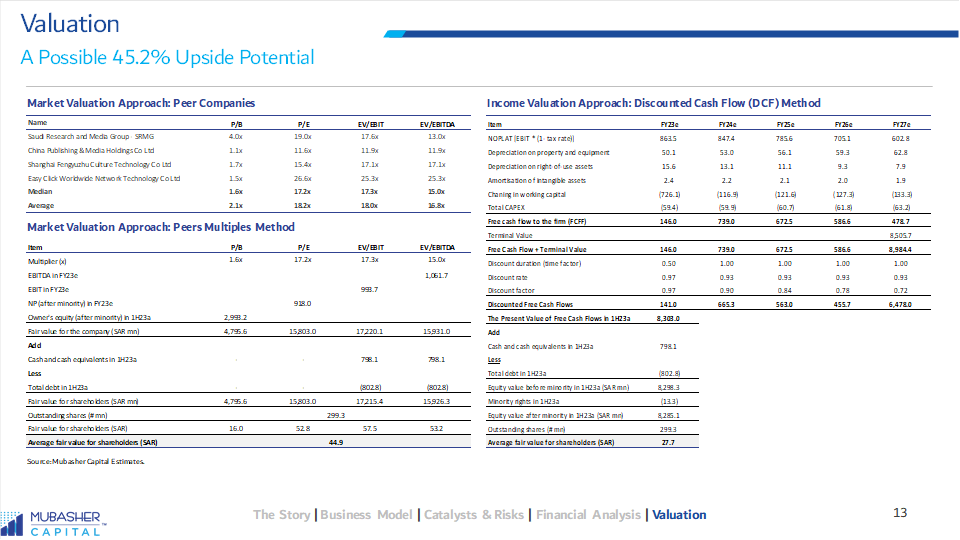
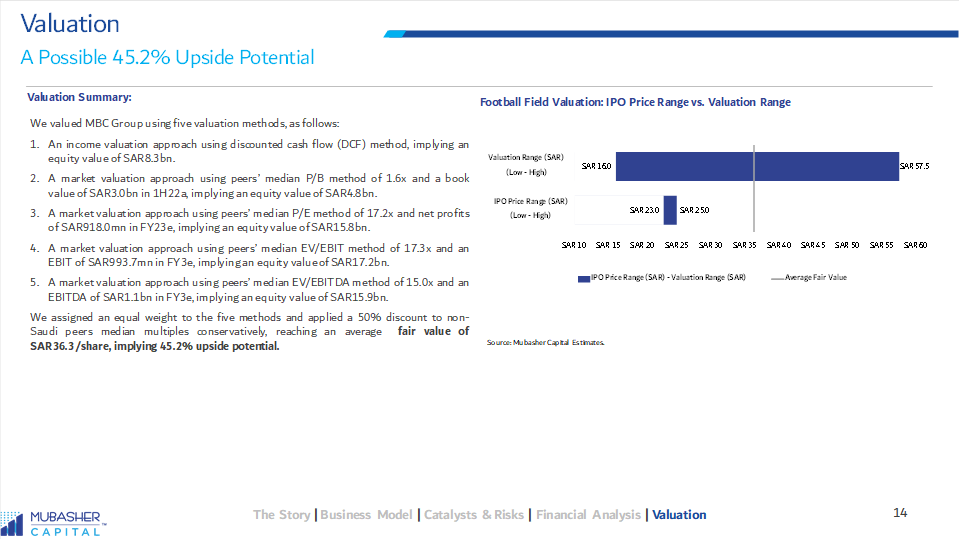
Our AVG FV stands at SAR 68.9/share: Furthermore, alongside employing a discounted cash flow (DCF) model that yielded a FV of SAR82.6 per share, as illustrated in the corresponding table, an alternative valuation approach was undertaken through a relative valuation. This involved utilizing the median P/E and EV/EBITDA multiples for FY24 pertaining to F&B companies in Saudi Arabia. ​

The median P/E and EV/EBITDA multiples derived from analogous emerging markets peers were applied to MMC expected earnings and EBITDA for the FY24 to ascertain a fair value for the company’s stock. Assigning equal weights to both valuation methodologies resulted in an average fair value of SAR68.9 per share, signifying a 50% increase compared to the IPO mid point offer price of SAR46 per share.​

DCF – fair value SAR 82.6/ share: We discounted MMC’s free cash Flow to the firm (FCFF) over the coming five years (2024-2028) based on the following assumptions:​

  • Revenues to grow at a 5-Year CAGR of 8.9% to SAR1.4bn by 2028 due to increasing capacity in 2025 and the high demand from hajj and Umrah.​
  • EBITDA to grow at a 5-Year CAGR of 5.7% to SAR438mn by 2028, with EBITDA margin to stand at 31% on average during the forecasted period, in parallel with MMC historical average.​
  • AVG CapEx as % of revenues of 3.4% in the forecast period, except for FY24 as the company to expand Al-Jumum capacity with estimated CapeEx of SAR200mn.​
  • Working capital assumptions are based on historical averages cash conversion cycle (CCC).​
  • Cost of Equity (COE) is 8.2%, calculated as follows: KSA implied risk-free rate of 3.1% on average during forecasted period (based on US risk free rate and inflation differential between KSA vs. USA), KSA’s Equity Risk Premium (ERP) of 6.3% (based on a US market ERP of 5.94% and a relative standard deviation of 1.06 between US and KSA equity markets returns), and a Beta of 0.8.​
  • After tax cost of debt 5% on average.​
  • Capital structure of AVG 76% equity and 24% debt, based on the market value of MMC equity of SAR1.2bn (based on the IPO max price).​
  • Hence, we used a WACC of 7.7% in 2024e, which eventually declines to 7.1% by 2028e, with terminal year growth rate of 3%.​
SAR mn, except per-share figuresFY24eFY25eFY26eFY27eFY28e
NOPLAT  ​236 ​286 ​296 ​307 ​319 ​
Non – Cash Item​62 ​67 ​72 ​78 ​84 ​
Gross Cash flow298 353 369 385 403 
Change in Working Capital​(43)​(25)​(5)​(6)​(6)​
CAPEX​(200)​(43)​(44)​(46)​(48)​
FCFF55 285 319 334 350 
Terminal value (TV)    8,801 
PV of FCFF51 250 262 256 6,564 
Enterprise Value7,383  ​ ​ ​ ​
Add: Cash (9M23)​168 ​ ​ ​ ​ ​
Add: Investments (9M23)​0 ​ ​ ​ ​ ​
Less: Debt (9M23)​(793)​ ​ ​ ​ ​
Equity value6,757  ​ ​ ​ ​
Number of Shares Outstanding​82​ ​ ​ ​ ​
DCF Fair Value (SAR/ share)82.6 ​ ​ ​ ​
 ​ ​ ​ ​ ​ ​
IPO  Offer Price​46.0​ ​ ​ ​ ​
+/- Pot.80% ​ ​ ​ ​
Source: Mubasher Capital

Multiples valuation: We used Saudi Arabia F&B peers’ median P/E and EV/EBITDA FY24 multiples and applied them to MMC’s expected earnings and EBITDA in FY24 to arrive at a fair value for the stock as follows:​

  • P/E: Using peers’ median FY24 P/E of 26x and our forecasted net income for FY24, we arrived at a fair value of SAR60.2/ share.​
  • EV/EBITDA: By applying peers’ median FY24 EV/EBITDA of 18x to our forecasted FY24 EBITDA, we arrived at a fair value of SAR 63.9/ share.​
  • Our FV is SAR/ share based on equal weights: We assign equal weights to both valuation techniques, reaching a fair value of SAR 68.9/ share, which represents 50% higher than the IPO mid point price of SAR46per share.​
  • Price of animal feed or animal bran is not regulated which allows higher margins.​
  • Good relations (40 years) with key clients guarantees continuous future contracts.​
  • Catering all types of consumers through top, mid and low tier products.  ​
  • Revenues are almost 100% cash.​
  • High potential for exports based on the company’s strategy.​
  • High market share in wheat milling and feed industry of 24% and 7%, respectively.​
  • High competition in feed industry.​
  • From one hand, Gradual or full removal of wheat subsidy provided by GFSA will expose MMC to higher unsubsidized wheat prices but on the other hand will allow selling flour products above the SAR500/ton cap regulated by GFSA.​
  • High leverage with AVG D/E of 3.6x. ​
  • Outbreak of an infectious disease or other serious public health concerns.​
  • Stronger foreign currencies may lead to an increase in wheat costs (main raw material)  unless the company pass the increase.​
  • Tighter monetary policies, such as high interest rate to fight high inflation rates may increase the finance cost.​


Source: Mubasher Capital

Why Murabaha Financing is Gaining Popularity Among Entrepreneurs

In recent years, Murabaha financing has been gaining immense popularity among entrepreneurs. This Islamic financing method has been around for centuries but has only recently gained wider acceptance in the business world.

As traditional lending institutions become more stringent with their lending criteria, entrepreneurs are increasingly turning to Murabaha financing as a viable alternative.

This type of financing is based on a cost-plus-profit model that allows entrepreneurs to obtain financing without incurring interest.

The popularity of Murabaha financing has been further boosted by its compliance with Shariah law, which prohibits the charging or paying of interest.

This has made Murabaha financing an attractive option for Muslim entrepreneurs who are seeking funding for their ventures while adhering to their religious beliefs.

In this article, we will delve deeper into the reasons behind the growing popularity of Murabaha financing and explore why it could be the ideal financing solution for your business.

Murabaha financing is a type of Islamic financing that is based on a cost-plus-profit model. The financing provider purchases the asset that the entrepreneur wants to acquire and then sells it to the entrepreneur at a higher price.

The entrepreneur pays for the asset in installments, which include both the cost of the asset and the profit margin of the financing provider. The profit margin is agreed upon beforehand, and it is usually a percentage of the cost of the asset.

For example, if an entrepreneur wants to purchase a piece of equipment that costs $10,000, the financing provider will purchase the equipment and then sell it to the entrepreneur for $12,000.

The entrepreneur will pay for the equipment in installments, which include the cost of the equipment and the profit margin of the financing provider. The profit margin, in this case, might be 10% of the cost of the equipment, which would be $1,000.

Murabaha financing is different from conventional financing because it does not involve the charging or paying of interest. Instead, the financing provider earns a profit by selling the asset to the entrepreneur at a higher price than it was purchased for.

Murabaha financing offers several benefits for entrepreneurs. One of the main benefits is that it allows entrepreneurs to obtain financing without incurring interest.

This is particularly attractive to Muslim entrepreneurs who want to adhere to their religious beliefs while obtaining financing for their ventures.

Another benefit of Murabaha financing is that it is based on a cost-plus-profit model, which means that the profit margin of the financing provider is agreed upon beforehand. This makes it easier for entrepreneurs to plan their finances and budget for the financing costs.

Murabaha financing is also a flexible financing solution. Entrepreneurs can use Murabaha financing to acquire a wide range of assets, including equipment, inventory, and real estate.

The financing provider does not require any collateral for Murabaha financing, which makes it easier for entrepreneurs to obtain financing.


Murabaha financing differs from traditional loans in several ways. Traditional loans involve the charging of interest, while Murabaha financing does not. Traditional loans also require collateral, while Murabaha financing does not.

Another difference between Murabaha financing and traditional loans is the level of risk involved. Murabaha financing is considered a lower-risk financing solution because the financing provider owns the asset until it is fully paid for.

This means that if the entrepreneur defaults on the financing, the financing provider can repossess the asset and sell it to recoup their investment.

Traditional loans, on the other hand, are considered higher-risk financing solutions because they often require collateral and involve the charging of interest. If the entrepreneur defaults on a traditional loan, the lender can seize the collateral and sell it to recoup their investment.

If the collateral is not enough to cover the loan, the lender may take legal action against the entrepreneur to recover the remaining debt.

To be eligible for Murabaha financing, entrepreneurs must meet certain requirements. These requirements may vary depending on the financing provider, but they generally include:

– The entrepreneur must have a viable business plan and a clear understanding of the asset they want to acquire.

– The entrepreneur must have a good credit score and a stable source of income.

– The entrepreneur must be able to provide a down payment for the asset they want to acquire.

– The entrepreneur must be willing to sign a contract that outlines the terms and conditions of the financing.

Murabaha financing is available to both Muslim and non-Muslim entrepreneurs. However, Muslim entrepreneurs may prefer Murabaha financing because it is compliant with Shariah law.

Murabaha financing has been used successfully by entrepreneurs in a wide range of industries. One example is a startup that used Murabaha financing to acquire inventory for their e-commerce store.

The entrepreneur was able to obtain financing without incurring interest and was able to repay the financing in installments that were based on a cost-plus-profit model.

Another example is a small business that used Murabaha financing to acquire a piece of equipment that they needed to expand their operations.

The business was able to obtain financing without providing collateral and was able to repay the financing in installments that were based on a cost-plus-profit model.

Murabaha financing is offered by several financing providers, including Islamic banks and non-bank financial institutions. Some providers may specialize in Murabaha financing, while others may offer it as part of a wider range of Islamic financing solutions.

Entrepreneurs should research different Murabaha financing providers and options to find the one that best meets their needs.

They should compare the profit margins, repayment terms, and eligibility requirements of different providers to find the one that offers the most favorable terms.

The steps to apply for Murabaha financing may vary depending on the financing provider, but they generally include:

1. Research different Murabaha financing providers and options to find the one that best meets your needs.

2. Contact the financing provider and inquire about their eligibility requirements and application process.

3. Prepare a business plan and a proposal that outlines the asset you want to acquire and your repayment plan.

4. Provide any necessary documentation, such as financial statements and credit reports.

5. Sign a contract that outlines the terms and conditions of the financing.

While Murabaha financing offers several benefits for entrepreneurs, there are also risks and considerations to keep in mind.

One risk is that the entrepreneur may default on the financing, which could result in the financing provider repossessing the asset and selling it to recoup their investment.

Another consideration is that Murabaha financing may be more expensive than traditional financing options. The profit margin of the financing provider is added to the cost of the asset, which can increase the overall cost of the financing.

Entrepreneurs should carefully consider their financing options and weigh the risks and benefits of Murabaha financing before deciding to pursue it.

Murabaha financing offers several benefits for entrepreneurs, including the ability to obtain financing without incurring interest and flexibility in the types of assets that can be acquired.

However, there are also risks and considerations to keep in mind, such as the potential for default and the overall cost of the financing.

Entrepreneurs should carefully evaluate their financing options and consider their business needs and goals before deciding to pursue Murabaha financing.

By researching different financing providers and options, entrepreneurs can find the financing solution that best meets their needs and helps them achieve their business objectives.


What is Inflation Risk in fixed income

As an investor, it is essential to understand the concept of inflation risk, especially when investing in fixed income assets. Inflation risk refers to the threat of loss of purchasing power due to rising inflation rates.

When inflation increases, the value of money decreases. This means that the money you invested in fixed income assets may not have the same value in the future, making it harder to buy the same goods and services that it could in the present. This is where inflation risk comes into play, as it affects the real returns on your investments.

  • Inflation risk is a significant risk for investors in fixed income assets.
  • Inflation risk refers to the possibility of losing purchasing power due to rising inflation rates.
  • Inflation risk can affect the real returns on your investments.

Inflation risk is the potential for loss of purchasing power due to the effects of inflation. It is a risk that investors in fixed income securities face, as inflation erodes the value of the money they receive from their investments.

Inflation is the rise in the price of goods and services over time. When inflation occurs, the purchasing power of money decreases, as the same amount of money can buy fewer goods or services. This is because the prices of goods and services increase, while the value of money remains constant.

The effects of inflation can impact fixed income securities in various ways. One of the main impacts of inflation is on interest rates. As inflation rises, central banks tend to raise interest rates to control inflation. This results in a decline in the value of fixed income securities, as their yields become less attractive.

Inflation can be caused by a variety of factors, such as:

  • Supply-side shocks, such as an increase in the cost of raw materials or a decrease in the supply of goods and services.
  • Demand-side pressures, such as an increase in consumer demand or a decrease in the supply of money.
  • Structural factors, such as government policies or changes in the global economy.

Inflation can have various effects on fixed income securities, such as:

  • Reduced purchasing power, which can result in lower real returns for investors.
  • Increased interest rates, which can decrease the attractiveness of fixed income securities.
  • Changes in market conditions, which can result in a decline in the value of fixed income securities.

“Inflation is as violent as a mugger, as frightening as an armed robber, and as deadly as a hitman.”
– Ronald Reagan


While inflation risk can impact various types of fixed income investments, there are specific categories that are particularly vulnerable. These include:

Type of InvestmentDescription
Treasury BondsFixed income securities issued by the US government, which are typically considered low-risk due to their guaranteed interest payments and principal repayment at maturity. However, inflation can erode the real value of these payments, reducing returns for investors.
Corporate BondsFixed income securities issued by corporations, which are typically higher-yielding than treasury bonds due to the added risk of default. Inflation can impact the credit risk of these bonds and reduce their market value, leading to lower returns for investors.
Fixed AnnuitiesInsurance contracts that guarantee a fixed rate of return over a specified period. Inflation can erode the purchasing power of future payments, reducing the real value of returns for investors.
Certificates of Deposit (CDs)Bank-issued savings deposits that offer a fixed rate of return over a specified period. Inflation can reduce the real value of returns, particularly if the interest rate is lower than the rate of inflation.

It is important for investors to understand the susceptibility of their fixed income investments to inflation risk in order to make informed decisions about their portfolios. Diversification and investing in inflation-protected securities, such as Treasury Inflation-Protected Securities (TIPS), can be effective strategies for managing inflation risk in fixed income investments.

Investors can use several strategies to mitigate inflation risk in their fixed income portfolios. Here are a few techniques:

Diversification is essential to mitigate any form of investment risk. Investing in a broad range of fixed income securities with varying maturities, issuers, and credit ratings can help buffer inflation risk. It is advisable to spread investments across different segments of the bond market, such as government bonds, corporate bonds, and municipal bonds. This approach reduces the concentration risk in a single security or issuer.

Inflation-protected securities (IPS) are designed to shield investors from inflation risk. These securities are indexed to inflation, and their principal value adjusts regularly based on changes in the inflation rate. Treasury Inflation-Protected Securities (TIPS) are a type of IPS that offer a fixed interest rate plus inflation protection. TIPS are backed by the U.S. government and are considered to be a reliable and low-risk investment.

Short-term bonds are less susceptible to inflation risk as they have a lower duration. When interest rates rise due to inflation, the prices of long-term bonds decline more than short-term bonds. Therefore, holding short-term bonds reduces the impact of inflation on the portfolio. However, short-term bonds may have lower yields than long-term bonds, and investors should weigh this trade-off.

Bond duration measures the sensitivity of a bond’s price to changes in interest rates. In general, longer-term bonds are more sensitive to interest rate changes and, consequently, inflation risk. Therefore, investors can manage inflation risk by shortening the duration of their bond portfolio. By reducing the duration, their bond portfolio is less sensitive to changes in interest rates, reducing the impact of inflation.

By employing these strategies, investors can mitigate the impact of inflation risk on their fixed income portfolios. However, investors should note that no strategy can entirely eliminate inflation risk.

Assessing inflation risk is crucial to managing fixed income investments effectively. There are various indicators and metrics used to evaluate the potential impact of inflation on fixed income assets. Some of these include:

  • Inflation rate: This is the most fundamental indicator for assessing inflation risk. The inflation rate measures the percentage increase in prices of goods and services over a specified period.
  • Real yield: The real yield is the return on a fixed income asset after accounting for inflation. It provides an estimate of the purchasing power of the investment.
  • Duration: The duration of a fixed income investment measures its sensitivity to changes in interest rates and inflation. Typically, longer duration assets are more vulnerable to inflation risk.
  • CPI: The Consumer Price Index (CPI) is a measure of the average price level for goods and services purchased by households. It is commonly used to estimate the impact of inflation on fixed income investments.

Investors can also use inflation-protected securities, such as Treasury Inflation-Protected Securities (TIPS), as an indicator of inflation expectations. TIPS adjust their principal value based on changes in the CPI. If the CPI increases, the principal value of TIPS increases, providing investors with a hedge against inflation risk.

Overall, investors should consider a combination of these metrics and indicators to evaluate inflation risk and make informed investment decisions.

Investors in fixed income portfolios are vulnerable to the effects of inflation risk. The erosion of the purchasing power of money over time can have a significant impact on portfolio performance, affecting both capital appreciation and income generation.

One of the primary concerns for investors is the impact of inflation risk on bond yields. As inflation rises, bond yields tend to increase, resulting in a decrease in bond prices. This can lead to a decline in the overall value of fixed income portfolios.

Inflation risk can also affect income generation in fixed income portfolios. As inflation rises, the purchasing power of interest payments on fixed income investments decreases. This can result in a decline in real income, which can impact overall portfolio performance.

Managing inflation risk in fixed income portfolios requires a proactive approach. One strategy is to include inflation-protected securities in the portfolio. These securities are designed to protect against inflation by providing returns that are indexed to inflation rates.

Diversification is another key strategy for managing inflation risk. By investing in a variety of fixed income assets, investors can spread risk across different types of investments and reduce exposure to inflation risk.

Investors should also pay attention to the maturity date of fixed income investments. Longer-term bonds are more vulnerable to the effects of inflation risk compared to shorter-term bonds. As such, investors should consider investing in a mix of short-term and long-term bonds to balance the impact of inflation risk.

In conclusion, managing inflation risk is crucial for investors in fixed income portfolios. By employing strategies such as diversification and investing in inflation-protected securities, investors can mitigate the impact of inflation risk on portfolio performance.

Understanding and managing inflation risk is crucial in protecting the performance and stability of fixed income investments. Inflation can erode the purchasing power of money over time, reduce income generation, and negatively impact capital appreciation.

Investors can mitigate inflation risk by diversifying their portfolios, investing in inflation-protected securities, and monitoring inflation indicators and metrics. It is essential to stay informed and proactive in managing inflation risk to safeguard financial stability.

By implementing effective strategies and techniques, investors can mitigate the impact of inflation risk and achieve their long-term financial goals. Stay vigilant, stay informed, and stay proactive in managing inflation risk.


Guide to Fixed Income Securities

The Ultimate Guide to Fixed Income Securities: Exploring Types, Risks, and Returns

Are you looking for a stable and reliable investment option? Fixed income securities can be an excellent choice for investors looking to earn a steady income stream while minimizing risk. However, with so many different types of fixed income securities available in the market, it can be challenging to understand which one is right for you. That’s why we’ve put together the ultimate guide to fixed income securities. In this comprehensive guide, we’ll explore the different types of fixed income securities, including bonds, treasury bills, and more. We’ll also examine the risks and returns associated with each type of security, helping you make informed investment decisions. Whether you’re a seasoned investor or just starting, this guide will provide you with the knowledge and tools you need to navigate the world of fixed income securities confidently. So, let’s dive in and explore the world of fixed income securities together!

Types of fixed income

Fixed income securities are investments that offer a fixed return on investment over a set period. These securities are generally less risky than equities, making them an attractive option for investors looking for a steady income stream. The most common types of fixed income are bonds, certificates of deposit (CDs), and money market funds.

Bonds are a type of fixed income security that is issued by governments, corporations, and other entities. They are essentially loans that are made to these entities, and in exchange, investors receive regular interest payments until the bond’s maturity date. Bonds can be further classified into government bonds, corporate bonds, and municipal bonds. Government bonds are issued by the government to raise money, while corporate bonds are issued by companies to finance their operations. Municipal bonds are issued by local governments to raise funds for public projects.

CDs are issued by banks and other financial institutions. They are a type of savings account that pays a fixed interest rate over a set period. CDs are FDIC-insured, which means that the principal amount invested is safe. However, if you withdraw your money before the CD matures, you may have to pay a penalty.

Money Market Funds are mutual funds that invest in short-term debt securities such as Treasury bills and commercial paper. These funds are generally considered to be low-risk investments, but they may not offer a high return on investment.


While fixed income securities are generally considered to be less risky than equities, there are still risks associated with them. Some of the most common risks associated with fixed income are credit risk, interest rate risk, and inflation risk.

Credit Risk is the risk that the issuer of the fixed income security will default on their payments. This risk is higher for corporate bonds than for government bonds since companies are more likely to default on their debt than the government.

Interest Rate Risk is the risk that the value of the fixed income security will decrease if interest rates rise. This is because when interest rates rise, the value of existing fixed income securities decreases, as investors can earn a higher return on their money by investing in new securities that offer a higher interest rate.

Inflation Risk is the risk that the purchasing power of the fixed income security will decrease due to inflation. This is because inflation erodes the value of money over time, which means that the fixed income security may not be able to keep pace with inflation.

Bond ratings are a measure of the creditworthiness of the issuer of the bond. These ratings are assigned by credit rating agencies such as Standard & Poor’s, Moody’s, and Fitch. Bonds with higher ratings are considered to be less risky than bonds with lower ratings.

The highest bond rating is AAA, which is assigned to bonds that are considered to be of the highest quality and have the lowest risk of default. Bonds with a rating of BBB or higher are considered to be investment-grade bonds, while bonds with a lower rating are considered to be high-yield or junk bonds.

When investing in bonds, it’s important to consider the bond rating, as this can help you assess the risk associated with the investment.

The returns on fixed income securities are influenced by a variety of factors, including the interest rate environment, the creditworthiness of the issuer, and the maturity of the security.

The returns on fixed income are generally influenced by the prevailing interest rates. When interest rates rise, the returns on fixed income also rise to keep pace with the new interest rates.

The creditworthiness of the issuer of the fixed income security is an important factor in determining the return on investment. Higher-rated bonds typically offer lower returns than lower-rated bonds since they are considered to be less risky.

The maturity of the fixed income security also influences the return on investment. Longer-term securities generally offer higher returns than shorter-term securities since investors are giving up their money for a longer period.

The yield curve is a graphical representation of the relationship between the yield and maturity of fixed income. The yield curve is an important tool for fixed income investors, as it can provide insight into the future direction of interest rates.

A normal yield curve is upward-sloping, which means that longer-term securities offer higher yields than shorter-term securities. An inverted yield curve is downward-sloping, which means that shorter-term securities offer higher yields than longer-term securities. An inverted yield curve is generally considered to be a sign of an impending recession.

There are several investment strategies that investors can use when investing in fixed income. One of the most popular strategies is to create a laddered portfolio of bonds. This involves investing in a portfolio of bonds with different maturities, which can help to reduce the impact of interest rate changes on the portfolio.

Another popular strategy is to invest in bond mutual funds or exchange-traded funds (ETFs). These funds invest in a portfolio of bonds, which can help to reduce the risk associated with investing in individual bonds.

Here are some tips for investing in fixed income:

1. Diversify your portfolio by investing in a variety of different types of fixed income.

2. Consider investing in bond mutual funds or ETFs to reduce the risk associated with investing in individual bonds.

3. Research the creditworthiness of the issuer before investing in a bond.

4. Consider the maturity of the fixed income security before investing, as longer-term securities generally offer higher returns.

5. Monitor the yield curve to gain insight into the future direction of interest rates.

Fixed income are generally considered to be less risky than equities since they offer a fixed return on investment over a set period. However, fixed income securities may not offer the same potential for high returns as equities.

Equities are investments in stocks or shares of a company. These investments offer the potential for high returns, but they are also considered to be more risky than fixed income securities.

When deciding between fixed income securities and equities, it’s important to consider your investment goals and risk tolerance.

Fixed income securities can be an excellent option for investors looking for a stable and reliable income stream while minimizing risk. By understanding the different types of fixed income securities, the risks associated with them, and the factors that influence returns, investors can make informed investment decisions. Whether you’re a seasoned investor or just starting, the tips and strategies outlined in this guide can help you navigate the world of fixed income securities with confidence.


US Monterey Report

MBC Shows The First Listing on the Saudi Market in 2024

This site is registered on wpml.org as a development site. Switch to a production site key to remove this banner.